6G-HOLONET kicks off in London: from shared ambition to a working plan
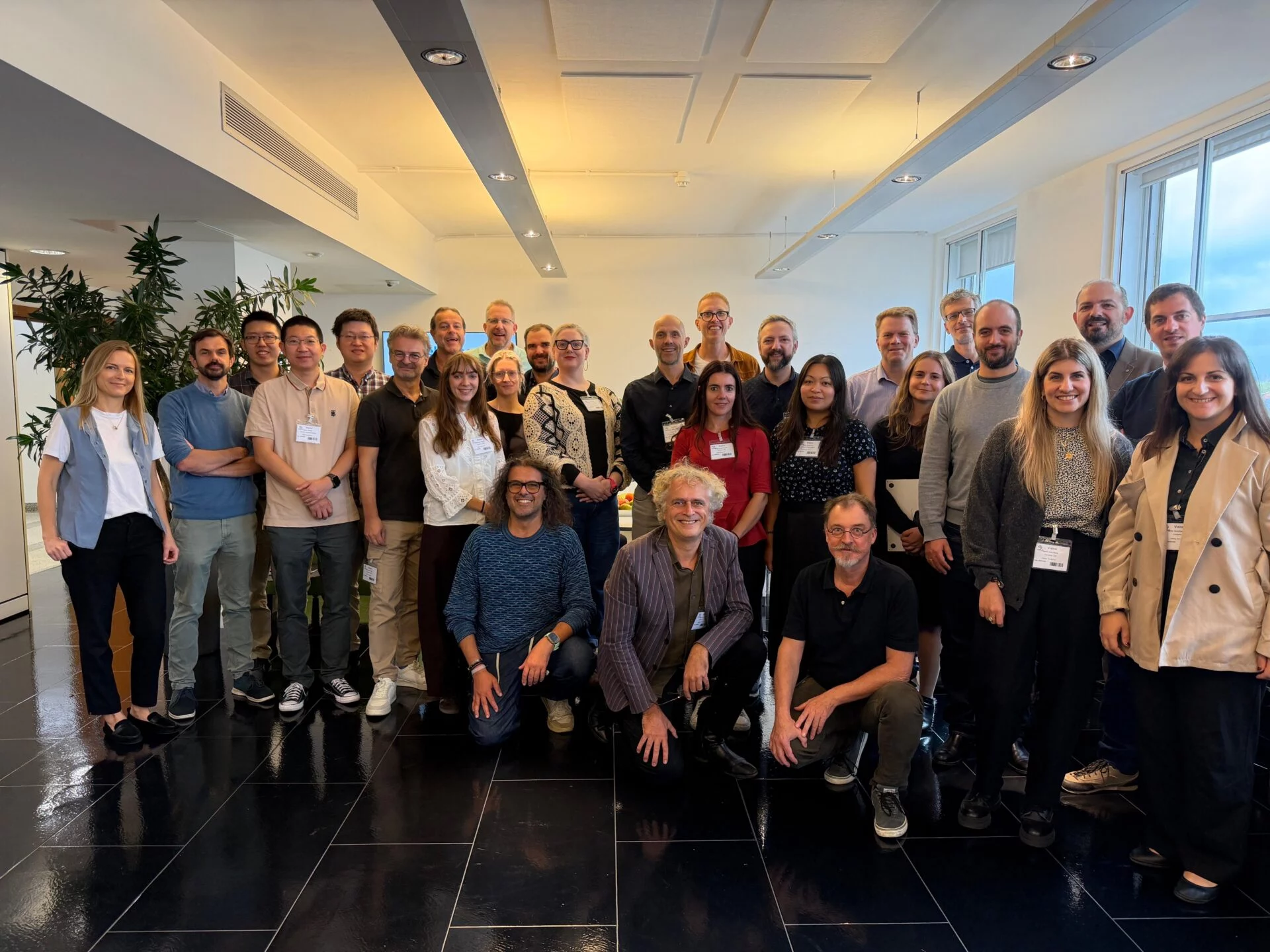
On 29 and 30 September, the partners of 6G-HOLONET met at the London offices of Digital TV Group (DTG), the project coordinator, to officially launch the project. Over two days, 16 organisations from across Europe turned a funded proposal into a shared plan of action.
6G-HOLONET is a three-year Innovation Action co-funded by the European Union through the Smart Networks and Services Joint Undertaking (SNS JU). Its goal is to show that next-generation networks can take holographic and immersive media out of the specialist studio and into real venues, museums and opera houses. To do that, the consortium is building a shared, AI-native network and edge computing layer for glass-to-glass media workflows, designed for the heavy uplink traffic that volumetric capture generates.
Setting the foundations
After a welcome from DTG and an introduction from the project’s SNS JU Project Officer, DTG walked the consortium through the essentials: seven milestones and 28 deliverables over three years, consortium meetings every six months, and a clear decision structure.
The first content session deliberately put requirements (WP1) and exploitation (WP5) side by side. If we want results that get adopted, the question of who will use them and why has to sit next to the technical requirements from day one. WP1 starts by revisiting the 38 KPIs and 15 KVIs from the proposal and will run a dedicated workshop for each use case in the coming weeks.
DTG also shared highlights from IBC 2026, where Gaussian Splatting and live immersive capture were clearly on the rise, from festival streams with spatial audio to volumetric captures of artists and sets. A strong signal that 6G-HOLONET starts at exactly the right moment.
Four use cases, four real-world tests
The heart of the meeting revolved around the use cases.
UC1, Immersive Live Music (TNO, with Effenaar and Firecell): musicians in different locations performing together in a shared 3D scene, with fans joining in VR, in 2D or on site. The technology will be integrated on TNO’s pre-6G testbed in The Hague and then trialled at the Effenaar venue in Eindhoven. The key question is not only whether the network performs, but whether musicians can actually play together and whether the audience experiences it as one coherent live concert.
UC2, Virtual Museum Guided Tour in VR (Nephelie, with Vicinity, the University of Bristol, Digital Catapult and the European Fashion Heritage Association): a live expert guide, captured volumetrically, leading visitors through a digital museum built with 3D Gaussian Splatting. Nephelie’s wireless capture system makes volumetric production portable and more affordable. For fashion heritage this opens something special: fragile garments from collections across Europe, brought together in one virtual exhibition where drape, shine and movement become visible again.
UC3, 6G-Powered Live Production: a live performance captured by multiple cameras and streamed into the cloud, where an AI toolbox enriches it in real time: multilingual subtitles, synchronised libretto translations, AI-generated sign language interpretation, and audio description for visually impaired viewers. The stage is the Greek National Opera, the same venue UC4 uses for its XR trials.
UC4, XR Opera Immersive Live Performance (Technical University of Crete with the Greek National Opera): building on an existing digital twin of the opera’s stage, UC4 adds a synchronised digital layer to live opera. The singers and orchestra stay at the centre; XR extends the stage with digital scenography, personalised viewpoints and accessible information for every spectator.
From work packages to trials
On day two, each work package lead presented their plan and KPIs: technical enablers (WP2, NTUA), experimental validation in two successive trial rounds (WP3, TNO), large-scale trials across nine sites (WP4, Digital Catapult) and impact maximisation (WP5, Sound with TWIST and DTG). TWIST outlined how the project will build a community, offer training and open resources, and connect with European networks such as 6G-IA, 5G-MAG, ADRA and NetWorld Europe.
Not just “does it work”, but “does it matter”
A recurring theme in London was that technical performance alone is not enough. Many in the sector feel that 5G performed well as a network but struggled to find the demand, applications and business models around it. 6G-HOLONET wants to avoid repeating that.
The consortium will test its results on four dimensions: can we build it, can people use it, does it solve a real problem, and are users willing to pay for it? Joint Business Clinics at key moments will bring partners and potential adopters together to collect that evidence along the way.
Timing matters too. The 6G standardisation process moves on its own schedule. By generating evidence early and often, 6G-HOLONET aims to contribute to standards and policy while they are still being shaped.
What’s next
The coming months focus on the state-of-the-art review and use case definitions, followed by user and network requirements and the KPIs and KVIs that will guide the trials.
Are you a venue, museum, broadcaster or creative producer interested in immersive media over next-generation networks? We’d love to hear from you.
Follow 6G-HOLONET on LinkedIn, Bluesky and YouTube to stay up to date.